




















Key Takeaways:
- Benzoin is a foundational fragrance ingredient that adds warmth, depth, and longevity.
- Benzoin smells sweet, soft, resinous, and lightly spiced, similar to vanilla but with more complexity.
- Benzoin works especially well in warm amber fragrances and pairs beautifully with notes like vanilla, labdanum, sandalwood, lavender, incense, and citrus.
Benzoin appears frequently in fragrance descriptions but rarely receives its own explanation. It’s most familiar as one of the three core ingredients in amber accord, alongside vanilla and labdanum. Though not necessarily the loudest note in a composition, it plays an important role in tying fragrances together.
This article explains what benzoin actually is, what it smells like, what it pairs well with, and where to find it in the Snif lineup.
What Is Benzoin?
Benzoin , also called gum benzoin, is a resin harvested from the bark of trees in the Styrax family, primarily Styrax tonkinensis and Styrax benzoin . These trees are native to Southeast Asia, particularly Laos, Thailand, Vietnam, and Sumatra.
The resin is collected by making deliberate incisions into the bark. The sticky sap that seeps out hardens into resin “tears,” which are then scraped off, dried, and processed into an absolute or a resinoid for fragrance. It's been used in fragrance, medicine, and incense since the 14th century. Arab traders often referred to it as “frankincense of Java,” and it eventually became popular in European pomanders and potpourri before permanently cementing its spot in perfumery.
Today, benzoin is primarily used as a base note and fixative. It evaporates slowly and helps anchor more volatile ingredients so that they last longer on the skin. It gives perfumes depth, softness, and longevity while quietly tying the rest of the composition together.
You’ll sometimes see it listed on ingredient labels as "styrax benzoin" or "Siam benzoin,” with “Siam” being the historical name for Thailand , where one of the most prized varieties originates.
What Does Benzoin Smell Like?
Benzoin has a few key elements to its scent. Here’s an overview.
Sweet and Vanilla-esque
Often, the first thing people notice about benzoin is its sweetness. It has a distinctly vanilla-esque warmth, but it’s richer and more dimensional than plain vanilla alone.
Where vanilla can sometimes smell sugary or dessert-like, benzoin adds depth and texture. It’s the difference between plain vanilla extract and vanilla beans with warm wood, amber resin, and spice. The sweetness feels softer, darker, and more sophisticated.
Soft
Underneath the sweetness is benzoin’s signature balsamic quality. It smells smooth, warm, and lightly resinous like aromatic tree sap that has mellowed with heat and time.
Importantly, it doesn’t smell sharp or aggressively woody. Benzoin feels rounded and diffused, almost like something that came from inside a tree, which it did. It’s more like the memory of something warm, filling in rough edges and making compositions feel cohesive. This softness is part of why perfumers rely on it so heavily.
Lightly Spiced
Benzoin also carries a subtle spicy warmth that’s often compared to cinnamon. It’s not an obvious spice note in the way clove or black pepper might be.
Instead, it creates a gentle glow beneath the sweetness, keeping the fragrance from feeling flat or cloying.
Powdery
There’s also a soft powderiness to benzoin that gives it an old-world elegance and settled luxury. It smells comforting rather than bright, and cozy rather than energetic.
This is one of the reasons benzoin appears so often in fragrances meant to feel intimate or developing. It creates the sensation of warmth settling close to the skin. It’s the old factory equivalent of cashmere, candlelight, and amber-toned interiors.
Ambery
Perhaps most importantly, benzoin contributes a radiant amber-like glow. Perfumers often describe this warmth as giving a fragrance “body.”
It doesn’t necessarily project loudly on its own, but makes the surrounding notes feel fuller, warmer, and longer-lasting. Without benzoin, amber fragrances would feel far less substantial and lose much of their signature glow.
What Scents Pair Well With Benzoin?
Benzoin pairs beautifully with a handful of different scents. Here are some of the best picks.
Vanilla
Vanilla is benzoin’s most natural companion. Both are sweet, warm, and resinous, but benzoin’s spicy edge and balsamic depth give vanilla something to push against. Together, they create a sophisticated, warm gourmand.
Labdanum
Labdanum is the third pillar of amber accord. Where benzoin is sweet and soft, labdanum is smoky and dark. The two complement and balance each other, creating a full amber experience that is richer than either ingredient alone.
Sandalwood
Creamy and smooth, sandalwood softens benzoin’s resinous density and adds a skin-close warmth to the mix. In return, benzoin adds longevity and richness to sandalwood. The combination is deeply comforting and long-lasting.
Lavender
Lavender and benzoin are an unexpected but classic pairing. Benzoin’s resinoid form is particularly effective at “fixing” lavender, anchoring the fresh, bright note so it lasts longer and feels more rounded. The result is cleaner and more balanced than a standard lavender scent.
Incense
Both incense and frankincense are resins with ceremonial weight. Together with benzoin, they create something that feels ancient and grounding. The combination is a warm, slightly smoky, calming scent that’s softened by sweetness.
Citrus
Bright citrus top notes over a benzoin base create a beautiful contrast. Ingredients like bergamot and orange blossom open with freshness and sparkle before melting into a sweet warmth, making way for benzoin’s dry-down.
What Is a Benzoin Scent To Try?
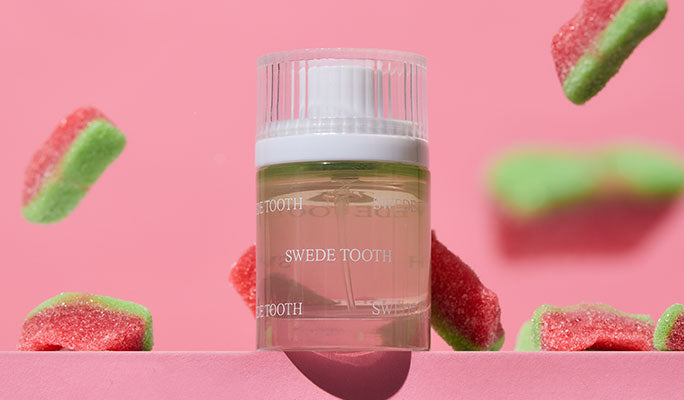
If you want to experience benzoin at its best, Honey Suite is a great place to start. In Honey Suite, warm benzoin amplifies the amber qualities in the crystalized honey accord, intensifying the sweet balsamic effect alongside rum and orange blossom. The result is rich, golden, and deeply warm. This is benzoin at its ideal environment, making any and all sweetness feel substantial.
Catch a Whiff
Benzoin is one of perfumery’s quiet power players. It rarely takes center stage, but it makes everything around it smell warmer, smoother, richer, and longer-lasting. Sweet, softly spiced, and resinous benzoin is the ingredient behind the comforting, enveloping glow people associate with amber fragrances.
If you want to smell that effect in practice, Honey Suite is the natural starting point. You’ll find that benzoin’s warmth and balsamic depth are impossible to miss.
FAQs
What does benzoin smell like?
Benzoin smells warm, sweet, and softly balsamic. It’s very similar to vanilla but richer and more complex, with a subtle cinnamon-spice edge and a powdery, resinous depth. It's not a loud or sharp ingredient that makes a statement on its own. Instead, it gives fragrances their body and warmth.
Is benzoin the same as vanilla?
They're closely related in character but distinct. Both are sweet and warm, but vanilla is creamier and more purely dessert-like. Benzoin has a resinous, balsamic quality underneath and a faint spice that vanilla lacks. In amber accord, the two are typically used together because they complement each other.
What is benzoin used for in fragrance?
Benzoin serves two main roles: it adds warm, sweet, balsamic depth to a composition as a base note, and it acts as a fixative, helping other ingredients to last longer on skin. It's a core component of amber accord alongside vanilla and labdanum, and it's widely used in oriental, gourmand, and warm floral fragrances.
Is benzoin natural or synthetic?
Benzoin is a natural ingredient. It’s a resin extracted from the bark of Styrax trees native to Southeast Asia. It's processed into an absolute or resinoid for use in fragrance formulation. You may see it listed on ingredient labels as "styrax benzoin" or "Siam benzoin."
Sources:
Benzoin | C14H12O2 | CID 8400 - PubChem
Styrax benzoin Dryand - Plants of the World Online | Kew Science
Siam Changes Its Name to Thailand | History | Research Starters