















Behind each of your favorite Snif products is a team of dedicated perfumers who came together to bring it to life.
All of these perfumers combine cutting-edge technical knowledge with game-changing creativity — and thanks to this dedicated team, each spritz of your favorite Snif fragrance offers an unforgettable scent experience.
In this guide, we’re going to shine a spotlight on the work of our perfumers.
We’ll explore the nuances of a perfumer’s work, look at how they choose the ingredients that take center stage in each scent, and talk about the time it takes for a fragrance idea to become a bottle in your hands.
What Is a Perfumer?
You might hear perfumers referred to as flavorists or fragrance chemists because the heart of their work is developing scents and flavors for different products.
At Snif, those products fall into one of three categories: fragrances, candles, and laundry . To be a perfumer, it’s important to have a keen sense of smell and awareness of how different scents work together to evoke emotional responses from wearers.
Along with the more creative side of perfumery, which involves coming up with new ideas for fragrances, perfumers must also have the scientific knowledge to be able to make their ideas a reality.
For this reason, many perfumers have a degree in biology, chemistry, or another science field because they’ll be expected to work with and manipulate the raw materials that go into each fragrance. Given that the job of a perfumer blends the creative and scientific worlds, it’s not uncommon to find perfumers who, along with their science degree, also have an interest in art.
“The Nose”
Perfumers are often called "a nose" or, in French, "le nez." It sounds like a nickname, but this title carries real weight and respect. Despite some overlap in the duties and skills of a "nose" and a "perfumer," they’re not quite the same thing.
A perfumer is the broader title for any professional who creates fragrance formulas, while a nose refers to a person who’s reached the highest level of olfactory training. These master perfumers have spent years studying to develop a refined ability to identify, isolate, and combine thousands of individual scents.
Perfumer vs. Evaluator
A perfumer's closest collaborator is typically a fragrance evaluator. Different from a perfumer or nose (the people responsible for composing fragrance formulas), an evaluator has the distinct job of assessing whether a product meets the creative brief. This distinction matters because separating the creative and evaluative roles helps bring to life a fragrance that’s both imaginative and wearable in a practical sense.
At Snif, evaluators and perfumers engage in an ongoing, open dialogue throughout product development to ensure the best possible outcome. On the Snif team , Elisa Gueye evaluates all of our fine fragrances, and Chelsey Boudreau evaluates our candles and laundry products.
What Does a Perfumer Do?
Now that you know have a general overview of the work of a perfumer, it’s time to take a close look at the three main elements of their work: sourcing ingredients, curating formulas, and testing and iterating scents.
Source Ingredients
The ingredients are the base of any fragrance, whether for a signature perfume or a laundry scent booster — and that’s why the first part of a perfumer’s job involves sourcing ingredients. What sets Snif apart from other brands is the investment our perfumers make in sourcing high-end materials.
Even when compared to luxury and designer brands, Snif outspends our competitors in terms of investment in quality fragrance oils … because our perfumers know that the ingredients are what make a fragrance truly exceptional.
Curate Formulas
With pure, potent ingredients at the ready, it’s time for our perfumers to curate formulas. This is where the real fragrance magic happens. When setting out to create a new scent, our perfumers always start with one key note or accord.
From there, they begin to layer in different notes in function of the story they’re trying to tell with the fragrance. This dedication to storytelling through scent is part of what makes Snif products so individual and evocative.
Test and Iterate Scents
Once the scents are ready, our perfumers begin to test and iterate scents until they’re perfect. Part of testing our fragrances involves ensuring they stand the test of time. To achieve this, our perfumers intentionally blend higher concentrations of fragrance oils into our products than other brands.
The result? Scents that stick around, candles with an impressive scent throw and longevity, and laundry products that leave your clothes smelling better for longer.
How Do Perfumers Choose Ingredients?
Maybe the most unclear part of a perfumer's work is the selection of different ingredients. Each product contains a specific blend of fragrance ingredients that transport you to a Miami beach in July or the forest you used to explore as a child, but how?
This section will explore how perfumers choose different ingredients to create scents that are nostalgic, flirtatious, clean, juicy, and everything in between.
Natural vs. Synthetic Ingredients
When you see the words “natural vs. synthetic,” you might automatically apply the logic you use when buying your groceries and think that natural ingredients are always preferable.
Although that logic certainly applies in some industries, it’s more complex when it comes to perfumery.
Natural ingredients, as you might imagine, refer to any ingredient that comes from nature. These ingredients are made by extracting the essential oils from different plants, flowers, fruits, and, in the past, animals. Our perfumers travel around the world to find the best ingredients, many of which come directly from or are heavily inspired by natural fragrances.
For example, one of our perfumers, Patricia, has traveled to Tahiti many times, where the vanilla found in Vanilla Vice is grown.
Synthetic ingredients are created in a laboratory to mimic the smell of scents found in nature or in the world around us. Sustainable ingredients are often more stable and last longer than natural ingredients.
Also, they tend to be more sustainable than natural ingredients which are not sustainable to harvest. The important elements to keep in mind with synthetic ingredients is how they are made and what production standards they must meet which varies from brand to brand.
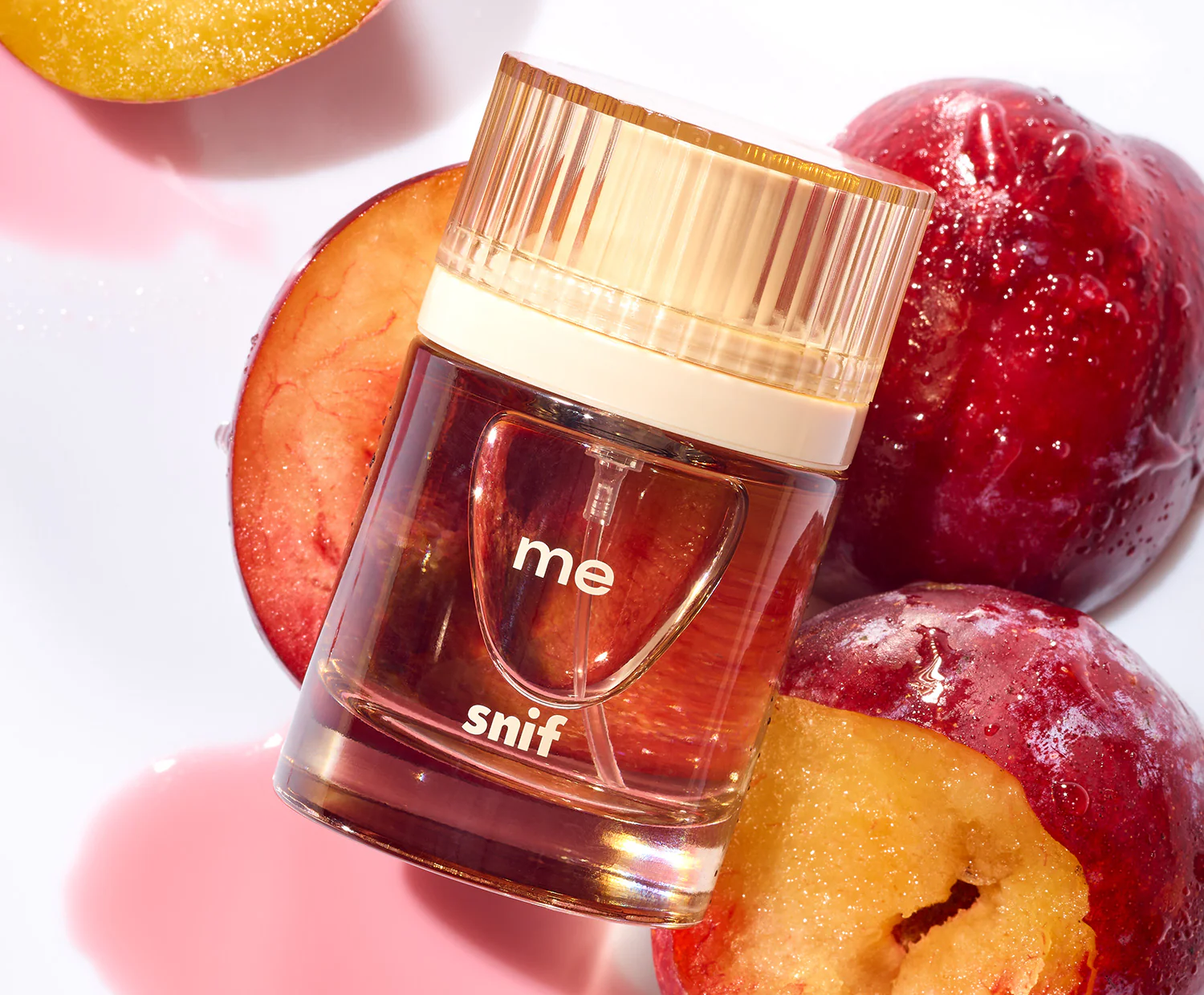
Take, for example, our Me fragrance. This scent is subtle and luxurious and is specifically designed to reflect your skin’s chemistry . One of the top notes found in this fragrance is plum, and our fragrance house used whole dried plums (even the pits) to capture the essence of the fruit’s scent profile — a classic example of a natural ingredient.
On the other hand, you’ll also find musk in this fragrance. Musk was traditionally harvested from the musk deer. This practice is now banned, and the musk you find in Me is synthetically derived in a way that is sustainable, ethical, vegan, and cruelty-free.
Musk is a great example of a synthetic ingredient that’s used in place of a natural ingredient to ensure that our fragrances continue to meet our high standards for consciously made, certified clean products.
That said, there are some synthetic ingredients that you want to avoid when picking your next signature scent. One big culprit is phthalates, a family of chemicals often used to enhance and stabilize scents. Although you can still find them in many fragrances, we avoid them completely because they are considered endocrine disruptors and may pose potential health risks.
Another synthetic you’ll never find in our fragrances or laundry products is synthetic dyes. Given that synthetic dyes can irritate sensitive skin , we don’t add them to any of our fragrances. Instead, the color of our scents reflects the safe, pure raw materials that go into them.
Our candles are also free from parabens, preservatives, and harmful dyes.
Working With Different Notes
When crafting a new fragrance, perfumers also have to consider how all the different notes will interact. Generally speaking, fragrance notes are divided into three main categories: top notes, middle notes, and base notes.
Top notes are the ones you smell right away with the first spritz. Middle notes are those that come through after the top notes fade and are often referred to as the heart of the scent, and the base notes are the smells that linger throughout the day. A perfumer has to consider the balance of these notes in each fragrance and how it will smell over time.
How Long Does It Take To Create a Perfume?
Like any creative endeavor, the amount of time it takes to create a perfume varies from fragrance to fragrance. The first stages involve coming up with a concept for the perfume which can take up to several months.
How long this process takes also depends on if the perfumer is working alone or with someone else. For example, with our Rose Era scent, the perfumer is Mathilde, but she worked with Monet McMichael to develop the fragrance.
Once the concept is there, the perfumer will work with different raw ingredients to formulate the fragrance. It will then pass through several rounds of testing and refining to make sure you get the best possible version of the fragrance. This might involve tweaking different notes, testing how the perfume ages over time, and making the necessary adjustments.
How To Become a Perfumer
It typically takes around 10 years to become a professional perfumer, and the process involves a combination of formal chemistry education and technical perfumery training. If that sounds like quite the commitment, it’s because it is — but specialized schools do exist to help get the job done.
The most well-known option is the Institut Supérieur International du Parfum, de la cosmétique et de l'aromatique alimentaire, or ISIPCA for short. This prestigious school for scent, cosmetics, and flavor was founded in 1970 in Versailles, France. Entry to this independent institution often requires a background in organic chemistry, biology, or pharmacy.
There are also major fragrance houses, like Givaudan and IFF, that run their own internal schools. These programs are highly competitive and most commonly reserved for their own employees.
Once formal training is complete, perfumers typically start out as assistants for senior noses, building their ingredient memories and learning to work with an expansive collection of raw materials. The ultimate goal is to learn these thousands of individual scent components well enough to compose formulas without referencing a database for every creative decision.
Snif’s perfumers bring this depth of training to every brief, resulting in fragrances that are as thoughtful as they are refined.
The Regulatory Side
It’s important to note that while perfumers are deeply creative, they don’t work in a vacuum.
Perfumers operate within a framework set by the International Fragrance Association (IFRA), which governs the safe use of fragrance ingredients. These guidelines are based on safety research conducted by the Research Institute for Fragrance Materials (RIFM), which assesses ingredients for dermal sensitization, systemic toxicity, and phototoxicity. RIFM findings are then translated by IFRA into clear, enforceable standards.
IFRA organizes products into categories based on how and where they're used. For example, a fine fragrance has different limits than a laundry product because they both interact with skin and clothing, but in very distinct ways.
A key part of working in perfumery is being educated on these regulations and knowing which ingredients are restricted in which categories and under what conditions. It’s part of what makes perfumery both an art and a science.
Snif Perfumer Perspective
So what’s it really like working in perfumery? Our perfumer Patricia Choux can be described as a painter of scents, and a watercolorist who accentuates the background with a touch of color in the foreground.
Another perfumer on our team, Mathilde Bijauoi, discovered perfumery while growing up near Versailles and fell in love with the profession. “When I read a formula, I see colors; materials also evoke textures for me. I have an intimate relationship with ingredients,” says Mathilde.
Every fragrance begins as a single idea that evolves into its best self via communal creative refinement. Scents are built from defined briefs that go through multiple iterations of testing and reshaping, informed by ongoing feedback from perfumers and the Snif team. There’s no cutting corners in our process.
The Science of Scent
You now know all about the science, creativity, and love that perfumers dedicate to every Snif product. From sourcing the best ingredients to rigorously testing and perfecting, each Snif scent has been intentionally crafted to tell a specific story and resonate with something in you.
All that’s up to you now is to get out there and start sniffing to find your next signature scent!
FAQs
What is a perfumer?
A perfumer is a trained professional who creates formulas for fine fragrances. They need technical knowledge to work with raw materials and olfactory skills to understand how they interact. In short, the job blends chemistry and creativity. At Snif, a team of world-class perfumers develops every formula from the ground up.
What's the difference between a perfumer and "a nose"?
Perfumer is the broader term for any professional who formulates fragrances. "A Nose," or le nez in French, is an industry term for a master perfumer who has reached the highest level of olfactory training and expertise. You can compare it to the difference between a chef and an executive chef: both cook, but the distinction signals a level of mastery.
How long does it take to become a perfumer?
It typically takes around 10 years to become a perfumer. This involves gaining a scientific foundation in chemistry, biology, or pharmacy, years of specialized perfumery training, and long-term hands-on work under senior perfumers. Formal programs at schools like ISIPCA in Versailles run for two to three years, and that's just the starting point.
What does a fragrance evaluator do?
While perfumers create formulas, a fragrance evaluator's job is to assess whether a formula meets the creative brief. They're the critical eye (and nose) that challenges the perfumer's work from the outside. At Snif, evaluators work across different product formats: fine fragrance, candles, and laundry, each of which has its own scent expression requirements.
Do perfumers have to follow safety regulations?
Yes, perfumers work within a framework set by IFRA (International Fragrance Association), which publishes ingredient safety guidelines based on research from RIFM (Research Institute for Fragrance Materials). These guidelines set maximum usage concentrations by product type. A formula will only make it onto shelves when it meets these standards.
Sources:
Essential Oils as Natural Sources of Fragrance Compounds for Cosmetics and Cosmeceuticals | NIH
Synthetic Musk Compounds and Effects on Human Health? | NIH
Introducing Snif.co x Mikayla | Instagram